

Now Reading: SillySeason’s Macbeth Turns the Audience into Accomplices
-
01
SillySeason’s Macbeth Turns the Audience into Accomplices
SillySeason’s Macbeth Turns the Audience into Accomplices

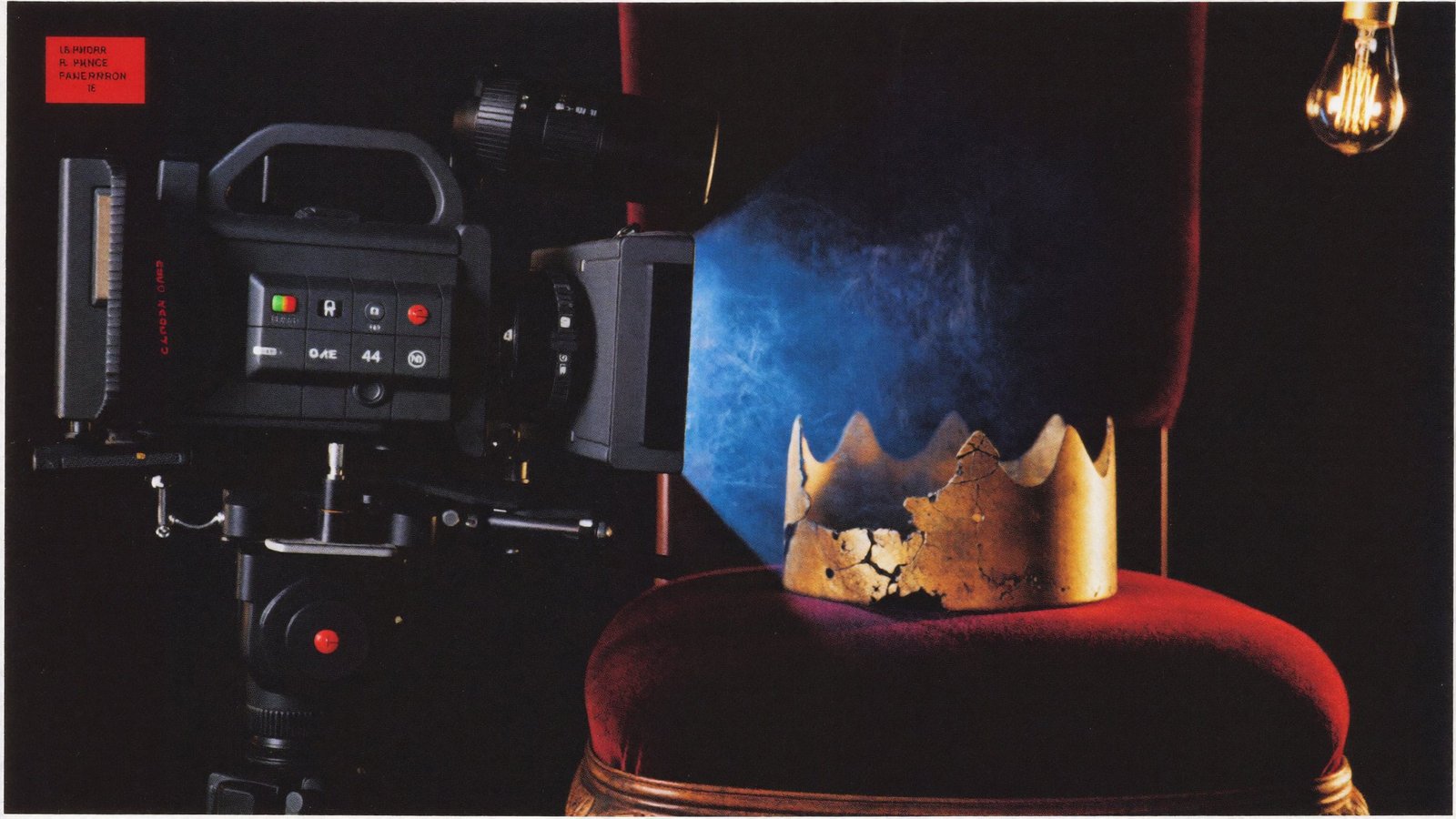
The words arrive mid-show, lowered over the stage in red neon: “Protect me from what I want.” Jenny Holzer’s text-piece descends like a verdict on a Lisbon audience that has spent the past hour enjoying the very spectacle of corruption the play set out to diagnose. By the time the neon is lit, director Ivo Saraiva e Silva and his collective SillySeason have already done their work: complicity is installed.
Their Macbeth—titled as Shakespeare wrote it, though decidedly not Shakespeare—recasts the Scottish general’s bloody ascent through the grammar of populist spectacle: cameras, screens, algorithmic seduction. “Our goal is for the audience to start the show very comfortable,” Saraiva e Silva told Agenda Cultural de Lisboa, “and end up in the discomfort of feeling that they, too, are Macbeth.”
“Protect me from what I want.”
Jenny Holzer, in red neon above the stage
The show opens with Patrícia Brüheim facing both a live camera and the audience, confessing she lacks “a good narrative to exist”—an influencer’s plea dressed as theatrical prologue. In a metatheatrical soliloquy, Rafael Carvalho imagines today’s Macbeth as “a nihilistic type, half-depressive, half-apathetic, staring into the void,” then asks: “Do we stage it? Deny it? Reinterpret it?” The production answers yes to each. What follows is a climb to power rendered as content. Faces fill a screen. Violence becomes entertainment. The witches’ prophecy—”you become bigger than yourself”—doubles as a growth-hacking mantra. Co-founder Ricardo Teixeira observes that the play “has always been difficult to watch, not only for the horror, but because it confronts each of us with things we repress.” The manosphere and digital populism enter the frame as extensions of the play’s oldest terror: normalised violence, above all against women and minorities.
The neon stays lit after the curtain call. It does not ask twice.